
Sittman & Pitt Poker Machine
The Birth of Mechanical Gambling
In the back rooms of Brooklyn, New York, Sittman and Pitt created the first poker-based gambling machine. Using five spinning drums containing 50 playing cards (with the Ten of Spades and Jack of Hearts removed to reduce royal flush odds), this mechanical marvel became an instant sensation in bars and saloons across America.
Key Developments
- Used 50 playing cards on five spinning drums, removing two cards to reduce payout odds
- Players inserted a nickel and pulled a lever to spin the drums
- Winning hands were paid in drinks, cigars, or store credit—not cash—to skirt gambling laws
- The machine had no automatic payout mechanism; bartenders determined prizes
- Quickly spread to over 3,000 locations in New York City alone by 1895
Key Figures
Industry Impact
Established the fundamental concept of poker-based gaming machines and created the template for all future video poker development. The removed cards technique became a lasting industry practice for adjusting odds.

Dale Electronics Poker-Matic
First CRT Video Poker Machine
Dale Electronics in Las Vegas introduced the Poker-Matic, the world's first video poker machine using a cathode ray tube (CRT) display. While revolutionary in concept, the technology was ahead of its time—players remained suspicious of electronic displays and preferred the tangible spinning reels they could see and trust.
Key Developments
- First gambling machine to use a television-style CRT monitor instead of physical reels
- Displayed virtual playing cards on screen, eliminating mechanical components
- Installed primarily on the Las Vegas Strip as an experimental attraction
- Used early microprocessor technology for random card selection
- Commercial failure due to player distrust of electronic outcomes
Key Figures
Industry Impact
Proved the technical feasibility of video-based gambling while revealing the crucial importance of player trust—a lesson that would shape RNG certification requirements for decades.

SIRCOMA Draw Poker
Si Redd's Gaming Revolution
William 'Si' Redd, a former Bally distributor, founded SIRCOMA (Si Redd's Coin Machines) and created the Draw Poker machine that would transform the industry. Understanding that players needed to feel in control, Redd designed a game that combined slot machine simplicity with poker's strategic elements.
Key Developments
- Si Redd purchased video poker technology rights from Bally for a reported $1,500
- SIRCOMA's Draw Poker allowed players to choose which cards to hold—a revolutionary feature
- Featured a user-friendly interface with clear hold/draw buttons
- Achieved 99%+ return-to-player (RTP) with optimal strategy, attracting skilled gamblers
- SIRCOMA later became International Game Technology (IGT), the industry giant
Key Figures
Industry Impact
Transformed video poker from a novelty into a mainstream casino game. The element of player choice created the 'skill game' category and spawned the advantage play movement that continues today.

American Coin Scandal
The Fraud That Changed Everything
Nevada Gaming Control Board agents discovered that American Coin, a major slot route operator, had installed fraudulent firmware chips in video poker machines across the state. The rigged EPROMs made certain winning combinations impossible, defrauding players of millions of dollars.
Key Developments
- Investigators found modified EPROM chips that eliminated royal flush possibilities
- American Coin executives faced federal charges for mail fraud and conspiracy
- Over 1,000 machines were affected across Nevada casino floors
- Players filed class-action lawsuits seeking compensation for years of fraudulent play
- Nevada enacted Regulation 14, requiring mandatory RNG source code review
Key Figures
Industry Impact
Established the modern regulatory framework for gaming machine certification. Nevada Regulation 14 became the global template for RNG testing, EPROM verification, and manufacturer accountability.
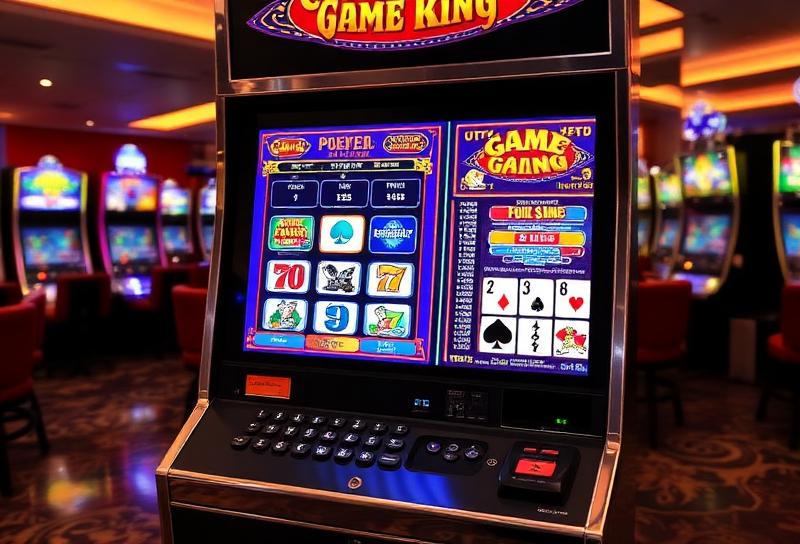
IGT Game King Platform
Touchscreen Revolution
IGT launched the Game King, a multi-game platform that allowed casinos to offer dozens of poker variants on a single machine. Featuring intuitive touchscreen technology and a modular software architecture, Game King became the dominant video poker platform for the next two decades.
Key Developments
- First widely successful multi-game video poker platform with touchscreen interface
- Offered over 50 game variants including Jacks or Better, Deuces Wild, and Bonus Poker
- Modular design allowed casinos to update game libraries without replacing hardware
- Introduced progressive jackpot networking across casino floors
- Remained the industry standard platform until the late 2010s
Key Figures
Industry Impact
Standardized the video poker experience and enabled the proliferation of game variants. The platform's longevity demonstrated the value of modular, upgradeable gaming systems.

TITO Revolution
Ticket-In, Ticket-Out Technology
The Ticket-In, Ticket-Out (TITO) system transformed casino operations by replacing coins with paper vouchers. Players could insert cash or vouchers and receive printed tickets for their winnings, eliminating the weight, noise, and logistics of coin handling while enabling seamless movement between machines.
Key Developments
- Replaced coin hoppers with thermal ticket printers and barcode scanners
- Reduced casino labor costs by eliminating coin counting and hopper fills
- Enabled player tracking systems to record betting patterns and preferences
- Accelerated gameplay by removing coin insertion and payout delays
- Led to the decline of coin-operated machines and the iconic 'coin sound' of casinos
Key Figures
Industry Impact
Fundamentally changed the casino experience and player psychology. The abstraction of money into tickets (and later, digital credits) contributed to debates about responsible gambling and spending awareness.
Continue Your Journey
Dive deeper into specific topics with our comprehensive articles covering every aspect of video poker history.
Explore All Topics